Arabica
Sweeter and more aromatic, with more acidity. Usually grown at higher altitudes. All of our coffees are Arabica.
- SweetnessMedium-high
- AcidityMedium-high
- BodyMedium
- BitternessMedium-low
- CaffeineMedium-low
Our next small-batch roast opens on January 1, 2027. Join the list to be first in line.

Coffee guide
Summary of coffee species, where it grows to shape how it tastes.
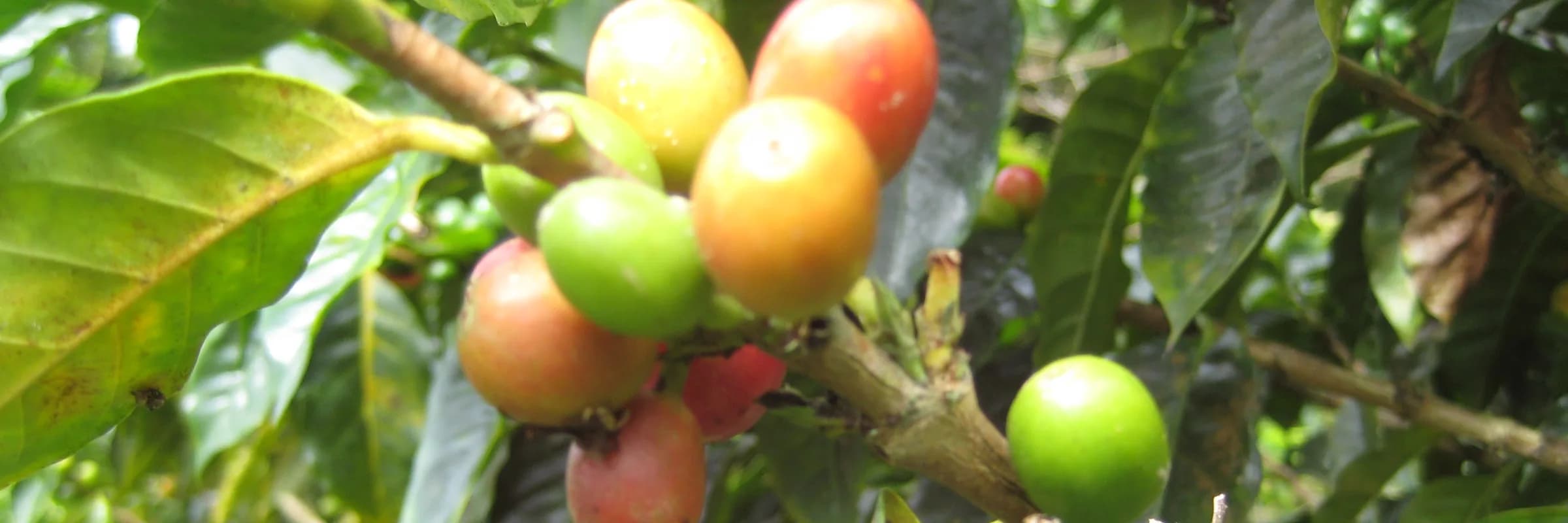
Species
Almost all the world's coffee comes from these two. The scales show general tendencies, not rules.
Sweeter and more aromatic, with more acidity. Usually grown at higher altitudes. All of our coffees are Arabica.
Stronger and more bitter, with roughly twice the caffeine. Hardier, and grown at lower altitudes.
Regions
Coffee grows in a band around the equator. Soil, altitude, climate and processing all change the cup, so these are tendencies rather than guarantees.
01
ColombiaAvailable now, BrazilAvailable now, Guatemala and more
Often smooth and rounded. Brazilian coffees tend towards chocolate and nut; higher-grown Colombian coffees often add a brighter, fruit-led edge.
02
EthiopiaAvailable now, Kenya and more
Often lively and aromatic, with floral or fruit notes. Ethiopia is widely seen as the birthplace of coffee.
03
Indonesia, Vietnam and more
Often heavier and earthier, though the region is varied. Indonesia is known for full-bodied Sumatran Arabica, though most of its crop is Robusta; Vietnam is the leading Robusta producer.
Taste the difference origin makes.